EcoVadis and DFGE partnership: boosting sustainable procurement in the German-speaking region


ecovadis-logo01DFGE becomes the first Consulting Partner in the German-speaking region of EcoVadis, the leader in supply chain sustainability ratings. This partnership will help companies to better answer their clients’ requests for an EcoVadis assessment, as well as to improve CSR performance.

EcoVadis, a collaborative sustainability rating platform

EcoVadis operates the first collaborative platform providing Supplier Sustainability Ratings for global supply chains. More than 25,000 companies use EcoVadis’ Corporate Social Responsibility (CSR) assessment, including thousands in Germany, Austria and Switzerland, which provides a rating and scorecard on their environmental, social/labor, and ethical practices.

EcoVadis provides a concrete solution enabling CSR transparency in the supply chain. Companies subscribe to EcoVadis and require their suppliers to be assessed by EcoVadis on their sustainability management. This analysis is carried out by EcoVadis experts and the results are then published on a collaborative platform, accessible by both buyers and suppliers, in the shape of a scorecard.

DFGE will offer various services

EcoVadis trusts DFGE in providing trainings and pre-checks of responses. Trainings are about EcoVadis principles, the questionnaire and platform management. They aim at empowering suppliers in completing the questionnaire and responding to clients’ requests. DFGE will also provide response checks to make sure that the answers are aligned with EcoVadis requirements and methodology. With more than 15 years of experience in sustainability data management and reporting, DFGE can help suppliers to find and improve the right documentation. DFGE also offers complete service packages that reduce company’s investment in time and resources and prepare all requested information to submit to EcoVadis.

On top of that, DFGE can also provide guidance to explain the results of the scorecard, conduct an improvement plan, consolidate the sustainability management system by providing dedicated documents such as the carbon footprint, a CSR report based on GRI guidelines, among other services.

As a consequence, EcoVadis users can benefit from guidance and dedicated feedback, in their own speaking language. DFGE has been trained by EcoVadis to provide the official products.

To read the full PR: http://www.dfge.de/en/ecovadis-partnership/

To learn more about EcoVadis: http://www.ecovadis.com/ or DFGE: http://www.dfge.de/en/

Or contact us at info@dfge.de for any question or information.

Science Based Targets / Sectoral Decarbonization Approach: Klimareporting.de veröffentlicht Info-Papier auf Deutsch


Science Based Targets Initiative Logo (source: http://sciencebasedtargets.org/)

Science Based Targets Initiative (source: http://sciencebasedtargets.org/)

Die Debatte um die sogenannten “Science-based Targets” hat weiter Fahrt aufgenommen, seitdem sich zum COP21-Gipfel 2015 in Paris zahlreiche große Firmen auf konkrete, wissenschaftlich ermittelte Reduktionsziele festgelegt haben (siehe http://sciencebasedtargets.org/companies-taking-action/)

Die deutsche Initiative “Klimareporting.de” , getragen von CDP und WWF, hat nun ein praxisorientiertes Themenpapier für Unternehmen veröffentlicht. Zum Dokument.

Darin wird der Ansatz der Science-based Targets allgemein erläutert, und besonders der “Sectoral Decarbonization Approach” genauer ausgeführt. Dies ist eine vom CDP mitentwickelte Methode zur Ermittlung, wieviel Emissionen ein bestimmtes Unternehmen z.B. bis 2050 einsparen muss, um in der Summe der Gesamtwirtschaft das Ziel von max. 2°C Erderwärmung erreichen zu können.

Dazu werden Annahmen getroffen, welches Potential zur Emissionsreduzierung in jedem Sektor zu wirtschaftlich vertretbaren Kosten erschliessbar ist. Daraus ergeben sich dann gewisse “Emissions-Budgets”, die jedem Sektor zur Verfügung stehen.

Mithilfe weiterer Eckdaten können Unternehmen in Folge ihren Status quo ermitteln und, unter Berücksichtigung wirtschaftlicher Prognosen, ihren individuellen Zielkorridor zur Reduzierung ermittlen. Hierzu ist auch ein Online-Tool verfügbar.

Der Report fordert Unternehmen, auch Mittelständler, auf, sich bereits heute mit der Thematik zu beschäftigen.

Die DFGE, als Experten im Bereich Emissions-Management und Reporting und offizieller CDP Silver Climate Change Consultancy Partner, bietet umfassende Unterstützung in diesem Bereich an. Sprechen Sie uns an unter info@dfge.de oder +49.8192.99733-20.


We just released our sustainability report – what about you?


Endorser Logo_gradient_blue_RGB


DFGE – Institute for Energy, Ecology and Economy is happy to share its second CSR/sustainability report, which takes the shape of a Communication On Progress (COP).

What is a Communication On Progress (COP)?

In 2015, DFGE produced its first Communication On Progress, a document showing the targets, the actions implemented to reach the targets and the measurement of outcomes for four sustainability issues: Human rights, Labor Practices, Environment and Anti-corruption.

These issues are listed under the 10 United Nations Global Compact principles.

Companies who commit to the United Nations Global Compact need to issue this Communication on Progress on a yearly basis. This document can be considered as the CSR or Sustainability report of the company.


What can be the main highlights?

For each topic, companies can explain which risks they have identified and on which basis, set related targets and formalize commitments in this sense. For instance, DFGE committed to promote UNGC and CSR even more, hoping to have at least one additional partner taking part in this international initiative.

Then, organizations can describe their actions and specify their scope of application, their purpose, etc. For instance, DFGE of course assessed its own carbon footprint to identify sources of emissions that lead to take new commitments and set new targets.

Finally, a measurement of outcomes enables stakeholders to understand the progress of the organization in each domain. For example, DFGE committed in 2015 to formalize hiring processes and to implement appraisal interviews, and in 2016 it was reported that these targets were met.


What are the benefits of such submission?

As a sustainability solution provider, DFGE wants to uphold and support CSR/sustainability international standards. For any company, it is an internationally recognized tool that can help disclose information to stakeholders in an easy way. Indeed, the Communication On Progress offers flexibility as the principles can be adapted to any company according to its size, sector, location, corporate culture. It is also a tool that helps improving sustainability management thanks to the goal-setting and reviewing.

You can consult DFGE’s COP on the UN Global Compact database. Further information on our website: http://www.dfge.de/en/sustainability-communications/un-global-compact-services/ or on the UN Global Compact portal www.unglobalcompact.org.

World Economic Forum: the future is in your hands!    


23894035713_fc88747bae_z

Why is the World Economic Forum important?

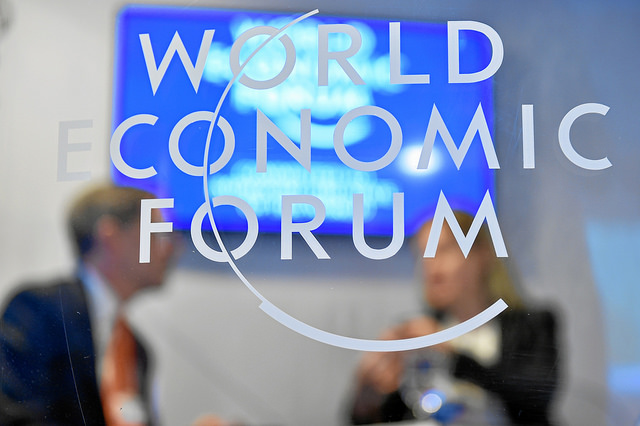
The 2016 World Economic Forum annual meeting took place in Davos, Switzerland, from the 20th to the 23rd of January and gathered decision-makers from all over the world. It enables to raise awareness among the most influential people of the world: indeed, it provides an opportunity to gain momentum and concretize current projects like the Paris Agreement from COP21 or the Sustainable Development Goals.

A new era: the fourth revolution

One of the key focus was the Fourth Industrial Revolution, a concept developed by Professor Klaus Schwab, Founder and Executive Chairman of the World Economic Forum, stating that this revolution is characterized by new technologies fusing the physical, digital and biological world. Technology can thus be a way to address current challenges.

Current challenges are deeply intertwined with sustainability agendas

  • Food security. By 2050, the world must feed 9 billion people.
  • Inclusive growth. Our current social, political and economic systems are exacerbating inequalities, rather than reducing them, which can lead to anger and xenophobic attitude
  • International Labor Organization estimates that more than 61 million jobs have been lost since the start of the global economic crisis in 2008.
  • Climate change. 2015 was the Earth’s warmest year in recorded history.
  • Gender equality. The gender gap has reduced, however some efforts still need to be done, including in remuneration.
  • The number of inhabits is rise to 9.7 billion in 2050 with 2 billion aged over 60.
  • 200 million SMEs don’t have access to formal financial services.
  • Focus in long-term projects will be beneficial.

How can your company contribute?

Any organization can contribute to address these global challenges, especially

  • Climate change. Organizations can assess their carbon footprint to identify the sources of emissions, set reduction targets accordingly, and implement actions to reduce them like switching to energy-efficient equipment, fostering car-sharing and public transportation among employees, among others
  • Gender equality. To tackle gender equality, companies can issue non-discrimination rules, raise awareness among the decision-makers, and provide the same compensation and benefits on the basis of past experiences and skills, or implement a whistle-blowing system to report such cases and deal with them
  • Inclusive growth/employment. Companies play a key role in employing people. A solution for inclusive growth can be to implement shared value initiatives by launching a new product meeting social needs, or redefining productivity the value chain while focusing on the social and environmental constrains in the supply chain, or create a local competitive cluster
  • Healthcare. Companies can help foster employees’ health and well-being by focusing on ergonomics in the workplace, preventing stress, preventing occupational diseases.

If you are an organization aiming at improving sustainability and planning to participate in sustainability reporting, or looking for support when calculating your carbon footprint – contact us to learn more about our services via info@dfge.de

For more information about the forum: http://www.weforum.org/about/world-economic-forum and the world challenges: http://www.weforum.org/agenda/2016/01/what-are-the-10-biggest-global-challenges

The DFGE– Institute for Energy, Ecology and Economy provides consulting and auditing services to realize a Green Vision integrated in corporate business processes. Strategic advice on topics like technology, energy and emissions is expanded to business related and socio-economic aspects. Services range from consultancy in developing and managing customized analysis for testified Carbon footprint to validation of analysis methods and results for sustainable accuracy. As independent Institute DFGE’s work is based on advanced scientific and research methods and institutionalized standards. More at  http://www.dfge.de

Image credit: World Economic Forum, under the Creative Commons licence (BY-SA 3.0)


COP21: speeding up climate change actions


for blog

THE UNFCCC 21th Conference of Parties (COP21) was held in Paris from the 30th of November to the 12th of December, 2015. The 195 countries represented here reached an historical agreement to curb climate change.

The Paris agreement at a glance:

  • Objective to keep temperature rise below 2°C and try to limit it to 1.5°C
  • Five-year cycle of actions. 186 countries have published their action plans to reduce emissions.
  • Review mechanism every five years, with a first world review in 2023. This will help increase the transparency, countries will be required to report on their emissions.
  • Focus on climate change adaptation instead of mitigation, which means “adjusting systems in response to climate change, with changes in processes, practices, and structures to moderate potential damages or to benefit from opportunities associated with climate change,”(UNFCCC) while mitigation is about reducing GHG emissions.
  • Finance and burden-sharing. Developed countries are to provide financial resources to help resources countries, up to 100 billion dollars from 2020.
  • Loss and damage principle. The agreement acknowledges the Warsaw International Mechanism (WIM) on Loss and Damage, created in 2013 to deal with the cases when mitigation and adaptation fail.


What is next?

The agreement will be open to signature on next Earth day, the 22nd of April, 2016. To be enforced, at least 55 countries must ratify it, and they must represent at least 55% of the world’s emissions.

What can you do?

Every organization can take part in mitigating climate change and reducing emissions! A first step is to assess the carbon footprint to then reduce the identified emissions by implementing many simple actions at local level.

For more information: Paris agreement and a related infographic, UNFCCC, carbon footprint,  or contact us at info@dfge.de

Top 10 Sustainability documents


Financial Planning, Pen and Calculator and Review of Year End Reports

Lost in all the requests for information linked to sustainability management and reporting? DFGE has chosen the top 10 documents you can easily share with your stakeholders.

Nowadays, transparency is expected from companies and CSR/sustainability reporting has been increasing by 5 points from 2011 to 2014[1]. There are many channels where information can be reported: it can be asked directly from customers, it can be a need from the communication department, the sales department might need to answer a bid of tenders, the shareholders may want your company to publish a CSR report, audits are also taking these topics into account, among other examples.

To make your company save time, DFGE has listed the top 10 documents that can be provided in this sense and their interests, like the CSR report. To consult the full list please go to our press release.

You can also contact us directly at info@dfge.de or consult our website: http://dfge.de

[1] Source: http://www.grantthornton.co.uk/en/insights/trends-in-corporate-social-responsibility-2014/

Video: UNFCCC’s Christiana Figueres on CDP


Climate disclosure goes mainstream

As seen on http://blog.cdp.net/climate-disclosure-goes-mainstream/

Also check out her blog: http://figueres-unfccc.net/

Video

Video: GRI Plenary on G4- Introducing the main features of G4


Plenary on G4- Introducing the main features of G4 from GRI on Vimeo.

Understand GRI in 2 minutes


What is the purpose of GRI?

GRI (Global Reporting Initiative) is an internationally recognized standard for CSR reporting to help organizations set goals, measure performance, and manage change in order to make their operations more sustainable. The guidelines are now in their 4th version (G4).

G4 process in a few words:
– Identify your company’s “Material Aspects”, e.g. the environmental, social and other CSR impacts that your organization is facing and how they relate to the broader sustainability context. In this sense, you will be focused only on what truly matters and how it impacts your stakeholders. When defining such issues, it is fundamental to consult them to match your organization’s priorities with theirs. This step is also called “Defining Report Content”.
– Prepare the data to be submitted in the report: the “General Standard Disclosures” (including “Material Aspects” and “Stakeholder Engagement”) and “Specific Standard Disclosures”, whose contents will depend on the “Identified Material Aspects”. Here you can choose the extent to which your company wishes to report, with “Core” and “Comprehensive” option. During this step, “Principles for Quality” are to be complied to make sure that the report is comparable, accurate, understandable,…
Write and shape the report. You can choose any structure, for instance according to your strategy’s pillars. You just need to include the GRI index showing the indicators can be found. If the report is not complete, a given statement will be added.
Publish your report and notify GRI.

What are the benefits?

  • Identify CSR priorities
  • Track performance
  • Benefit from competitive advantage
  • Enhance relations with stakeholders
  • Facilitate comparability

DFGE is happy to answer your questions and provide more support.

For more information, please consult the GRI-Website or check this video focusing on the differences between GRI3 and GRI4:

Get ready for the new version of ISO 14001:2015


ISO 14001 is an internationally recognized standard for environmental management systems. Since 2012, a technical committee has been revising the existing norm to publish a new version in September 2015.

How will it impact certified companies?

  • Companies certified in accordance with ISO 14001 former versions (2004 or the amended version of 2009) are given a three-year period to adapt their environmental management system according to the 2015 version.
  • All certificates in accordance with 14001:2004 will be invalid from 15/09/2015

What are the main changes of this version?

  • Integrated approach with other standards like ISO 9001 by using the same definitions and terms
  • A more strategic environmental management by identifying and leveraging opportunities that are beneficial to the environment and the company
  • New clause on leadership with specific roles to promote environmental management within the organization
  • A focus on protecting the environment through committing to proactive initiatives
  • A focus on objectives measurement and change
  • A new requirement on communication
  • An extension of the scope of application: the organization also needs to take into account product design and development as well as controlling outsourced processes

For more information you can review: http://www.iso.org/iso/iso14001_revision or watch the ISO video

The DFGE is happy to help you to align your environmental management with the new framework http://www.dfge.de